.png?width=96&height=41&name=Cove_Logo_Updated%20(1).png "Cove_Logo_Updated (1)")
.png)
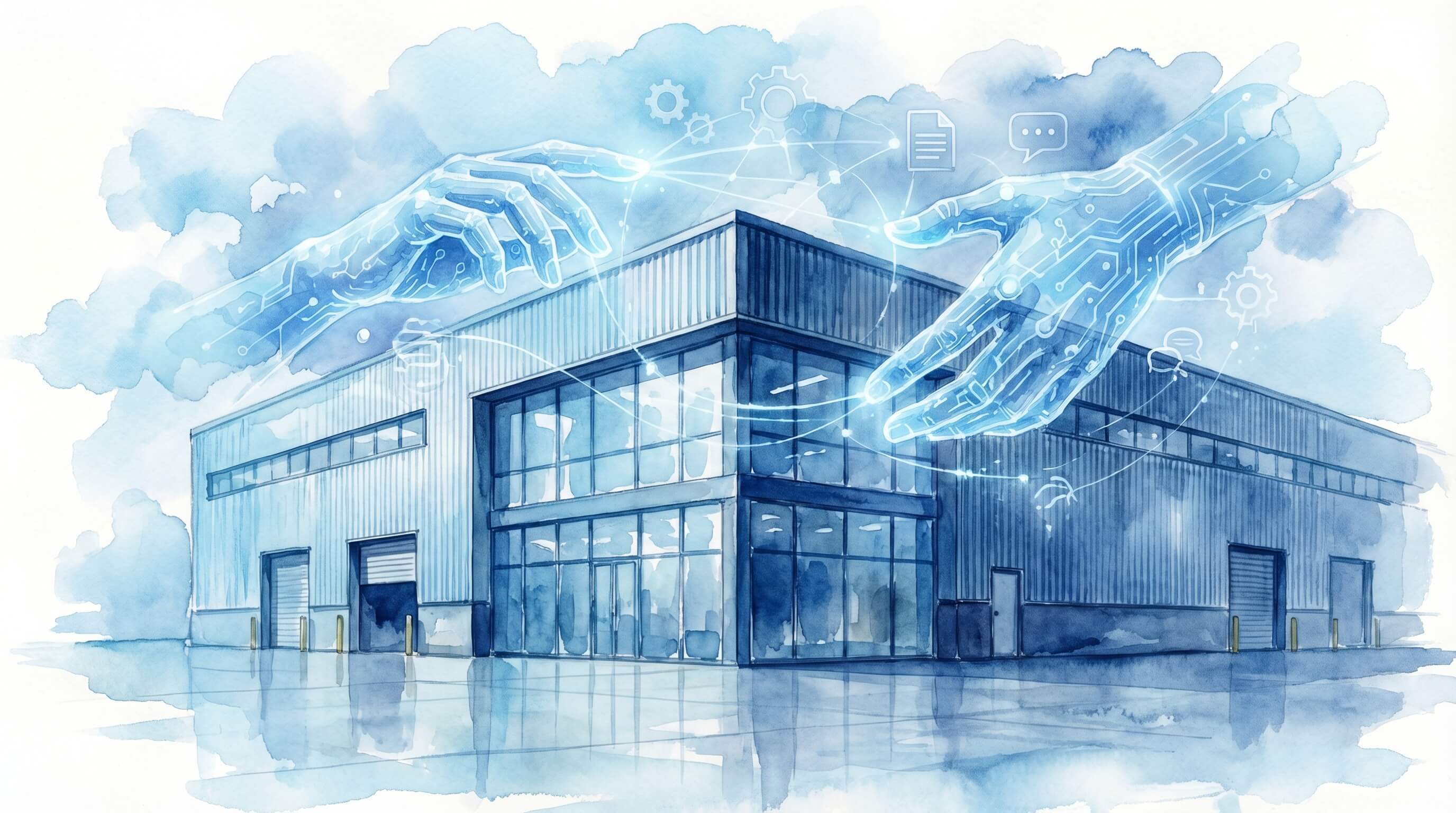
Industrial real estate has always been a high-stakes environment. Tenants depend on your properties to keep their supply chains moving, their workers productive, and their operations on schedule. When something goes wrong, whether it is a broken dock door, a delayed vendor, or a lapsed certificate of insurance, the ripple effects move fast.
That pressure is exactly why so many property management executives are paying close attention to AI right now. Commercial Real Estate AI tools are starting to reshape how industrial properties are managed, and the shift is happening faster than most people expected. But before you can take advantage of it, you need to understand what AI is actually doing in this space and where it fits into the work you already do every day.
The Industrial Real Estate Landscape Is More Demanding Than Ever
Industrial vacancy rates have remained near historic lows in many major markets, and tenant expectations have risen accordingly. According to CBRE's 2024 U.S. Real Estate Market Outlook, demand for industrial space continues to be driven by e-commerce growth and supply chain restructuring. That means your tenants are often operating under significant pressure themselves, which means they have less patience for operational friction on your end.
At the same time, the properties themselves are growing more complex. AI warehouse facilities and AI factory spaces now often house sophisticated operations that require precise coordination between your team, vendors, and the tenants on-site. The old model of reactive property management, waiting for something to break before you act, simply does not hold up in this environment.
What "Industrial AI" Actually Means for
Property Managers
There is a lot of noise around AI right now, and it is easy to get lost in the hype. When people talk about Industrial AI in the context of property management, they are often referring to AI-driven tools that assist with decisions, automate routine tasks, and surface information faster than a human team could on their own.
What this looks like in practice is less dramatic than the headlines suggest. You are not replacing your team with robots. You are giving your team better tools so they can manage more, respond faster, and make fewer errors. For property management leaders overseeing multiple industrial assets, that kind of operational lift matters enormously.
Work Orders and Maintenance: Where AI
Makes an Early Impact
One of the clearest places where CRE AI is already showing up is in maintenance operations. Work order management at an industrial property is genuinely complex. You might be dealing with dozens of open requests at any given time across multiple buildings, coordinating with several vendors, and trying to prioritize in a way that minimizes disruption to tenants who are running 24-hour operations.
AI-assisted platforms can help you triage and categorize incoming work orders automatically, route them to the right vendor, and flag items that are aging past acceptable thresholds. This is not about removing human judgment from the process. It is about making sure the right information reaches the right person at the right moment. According to a report from Deloitte, property managers who implement smarter maintenance workflows report measurable improvements in tenant satisfaction and cost control.
Preventive maintenance scheduling is another area where AI has a strong role to play. Rather than relying on a static calendar, AI-informed scheduling can adapt based on usage patterns, service history, and vendor availability. For a property housing a busy distribution center or a manufacturing tenant running multiple shifts, the difference between scheduled downtime and unexpected downtime can be significant.
Compliance and Risk: Getting COI Management
Under Control
Certificate of insurance management is one of those operational headaches that most property managers have learned to live with. Tracking COIs across dozens of vendors and contractors, making sure coverage is current, and catching lapses before they become liabilities is tedious work that is also critically important.
In an AI warehouse or AI factory context, the stakes are even higher. You may have more vendors on-site more frequently, which means more certificates to track and more opportunities for something to slip through. According to the Insurance Information Institute, inadequate vendor insurance coverage is one of the more common sources of liability exposure for commercial property owners.
AI-assisted COI management tools can automatically flag expiring certificates, send reminders to vendors, and maintain a real-time compliance record without your team having to chase everything down manually. This shifts your team's energy from administrative follow-up to genuine risk oversight, which is where their attention should be.
Visitor Access Management in High-Security
Industrial Environments
Industrial properties often have stricter access requirements than other commercial asset types. A distribution center handling high-value goods or a manufacturing facility with proprietary processes has real security needs that go beyond a standard office building. Managing who is on-site, when, and why is a daily operational challenge.
AI-powered visitor access management systems can streamline this process considerably. Pre-registration workflows, digital check-in, and automated notifications to your tenants when a visitor or contractor arrives all reduce friction while maintaining the audit trail your team needs. For properties where tenant leases include specific access requirements, having that documentation and accountability built into your platform is a meaningful operational advantage.
The data these systems generate is also useful. Over time, you can see patterns in who is accessing your properties, identify vendors who are consistently non-compliant with check-in procedures, and build a more accurate picture of on-site activity. That kind of visibility is hard to achieve with manual sign-in sheets and phone calls.

Tenant Communication at Scale
Managing tenant relationships across a large industrial portfolio is a communication challenge as much as it is an operational one. Your tenants need timely updates about maintenance windows, property changes, inspections, and anything else that might affect their operations. Getting that information out clearly and consistently is harder than it sounds, especially when you are managing multiple properties with different tenant mixes.
AI-powered tenant experience platforms are helping property management teams handle communications more efficiently through smarter announcement systems and push notification platforms. Instead of drafting individual emails or relying on your team to remember who needs to know what, you can set up targeted communication workflows that reach the right tenants with the right information at the right time.
And instead of your team trying to think of the right way to craft a message, sitting down and writing it, AI tenant communications can take care of it for you in seconds. Once you have a comms system like this in place, you’ll realize how much of a time suck manually announcements really were for your team.
In industrial real estate, where your tenants are often running time-sensitive operations, that responsiveness is not just a nice touch, it is a competitive differentiator.
Inspections and Compliance Tracking
Across Multiple Assets
Inspection tracking is another area where the complexity of industrial properties can create real operational risk. You are likely managing scheduled inspections across multiple buildings, coordinating with vendors, documenting results, and following up on any items that need remediation. Without a structured system, it is easy for things to fall through the cracks.
AI-assisted inspection platforms help by digitizing the process, creating automatic follow-up tasks when issues are identified, and giving you a consolidated view of compliance status across your entire portfolio. If you’re overseeing five or ten industrial properties, that kind of portfolio-level visibility is genuinely difficult to achieve through spreadsheets and email threads.
This matters not just for internal efficiency but for your relationship with tenants. Tenants in AI warehouse and AI factory environments increasingly expect their property managers to operate with the same level of operational discipline they apply to their own businesses. Showing up with a digital inspection process and a clear remediation workflow signals that you are running a professional operation.
The Role of Technology Platforms in
Supporting Your Team
What good technology does is reduce the administrative load on your team so they can focus on the work that actually requires judgment, relationships, and experience.
A well-configured AI property management software gives your team access to work order dashboards, maintenance schedules, COI status, visitor logs, inspection records, and tenant communications all in one place. When AI is layered into that infrastructure, it helps surface what needs attention, automate routine steps, and reduce the number of things that fall through the cracks. That is a meaningful upgrade to how your team operates, saving hours that can be reallocated to providing better service to tenants.
Custom branded apps and on-site tablet applications are also worth mentioning here. In an industrial environment where your tenants may have shift workers, floor managers, and logistics coordinators all needing access to property information, a well-designed tenant-facing app can reduce the volume of calls and emails your team receives while improving the tenant experience at the same time.
Preparing Your Portfolio for What Comes Next
The property management executives who are best positioned right now are not necessarily the ones who have adopted every new tool available. They are the ones who have built a solid operational foundation and are thoughtful about where technology can extend that foundation.
If you are managing industrial assets, start by identifying where your team spends the most time on manual, repetitive work. That is almost always where technology can make the fastest impact. Work order management, COI tracking, inspection documentation, and tenant communications are the most common answers, and they are also areas where mature, reliable tools already exist.
From there, think about what your tenants need from you in the next three to five years. Industrial real estate tenants are becoming more sophisticated in their own operations, and they will expect the same from their property managers. Getting your technology infrastructure right now is how you stay ahead of that curve.
The good news is that you do not need to overhaul everything at once. You need a clear starting point, the right platform, and a roadmap that matches your portfolio's actual needs.
Not sure where to begin your AI journey? Cove will lay down the road for you and give you the keys to the car. Request a demo and see how your industrial portfolio could run with the right platform underneath it.
.jpeg)
.jpeg)
.jpeg)
.jpeg)